

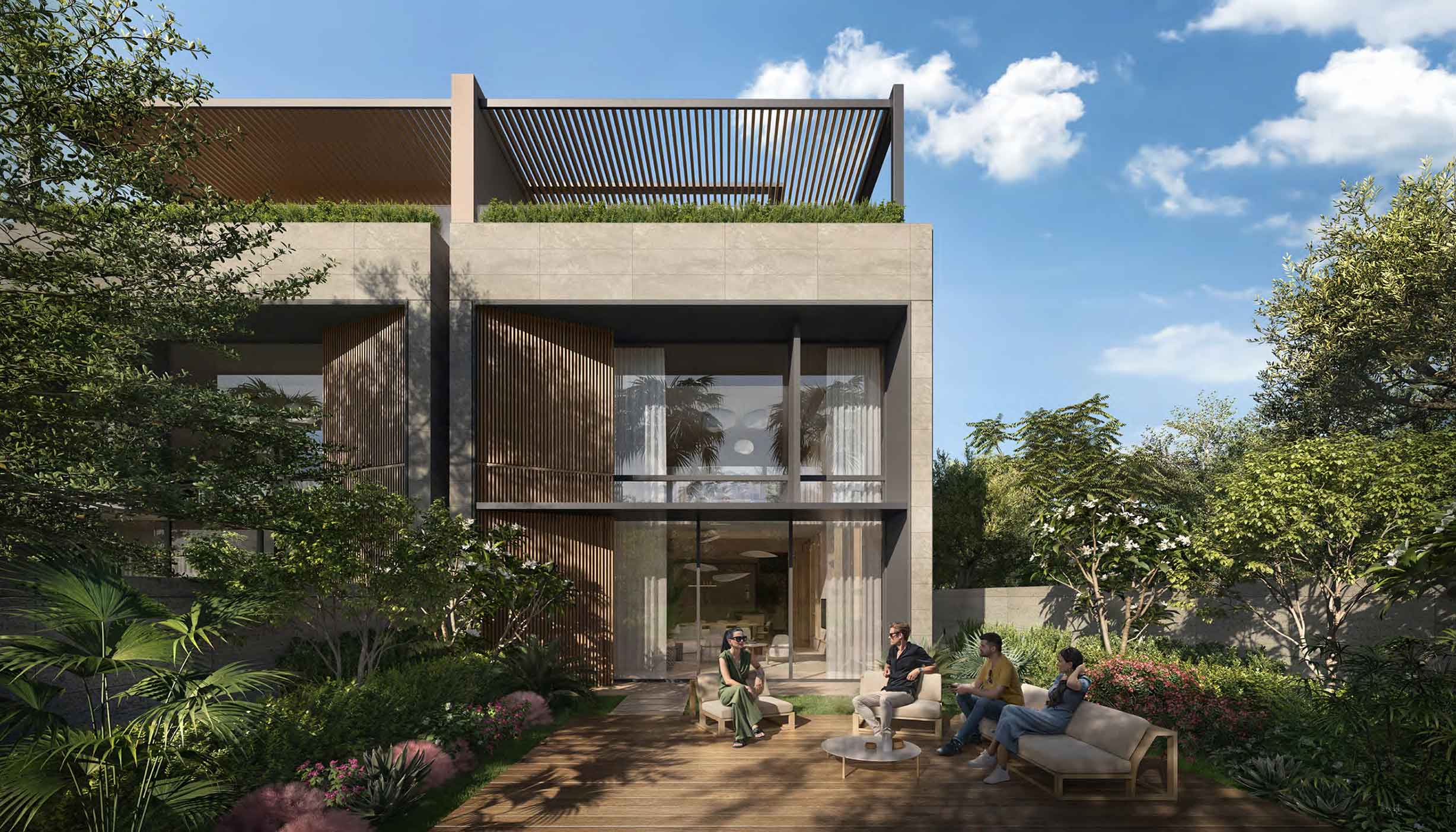
Dubai’s residential market continues to evolve, but few launches feel as strategically important as Tilal Binghatti villas. Positioned as Binghatti’s first dedicated villa and townhouse community, the project signals a major shift for a developer long associated with high-rise, design-led urban residences. Official project messaging describes it as a private, green, elevated community, while reputable market sources identify it as a low-density master-planned development in the Al Rowaiyah / Dubailand corridor with family-sized homes.
For buyers seeking more space, stronger privacy, and a calmer suburban rhythm without disconnecting from the city, this launch stands out for the right reasons. Instead of repeating the usual apartment-led formula, Tilal Binghatti villas introduces a more grounded concept of Dubai living—one that focuses on generous layouts, landscaped surroundings, and a community experience designed around everyday comfort.
On Buy Off Plan UAE, developments like this matter because they reflect where end-user and investor demand is moving. The market is no longer driven only by skyline views and branded towers. It is also being shaped by families, long-term residents, and investors who see growing value in low-density villa communities with lifestyle depth, connectivity, and future expansion potential.
What Makes Tilal Binghatti Villas Different
The biggest reason this project is attracting attention is simple: it represents a new direction for Binghatti. The developer’s official page presents Tilal Binghatti as its first-ever villa community in Dubai, while third-party market coverage consistently describes it as a first villa-and-townhouse move for the brand. That matters because brand transition often creates strong market curiosity, and in Dubai, curiosity around a major developer’s first entry into a new product type can quickly translate into interest from both buyers and investors.
What also sets the development apart is its positioning. It is not being marketed as a purely flashy luxury address built only around image. Instead, the messaging leans toward practical luxury: space, privacy, greenery, walkability, and family-oriented design. That gives Tilal Binghatti villas a wider appeal across different buyer profiles, including growing families, multi-generational households, and investors who understand the long-term resilience of well-planned villa communities.
Core strengths often associated with Tilal Binghatti villas
- First dedicated villa community by Binghatti
- Low-density suburban planning
- Family-sized homes with larger internal layouts
- Green spaces and landscaped surroundings
- Private outdoor living emphasis
- Stronger privacy than typical tower-based residences
- A more community-led lifestyle offering
- Strategic positioning in an emerging Dubai residential corridor
The Lifestyle Vision Behind the Community
Villa communities succeed when they solve real lifestyle needs, and that is where Tilal Binghatti villas appears especially relevant. Available project descriptions consistently highlight spacious homes, open layouts, and a setting that supports modern family living rather than compact urban convenience alone. The development is reported to include 3- and 4-bedroom townhouses and larger 5+ bedroom villas, with emphasis on indoor-outdoor flow, natural light, and private exterior space.
That design direction matters in Dubai today. Buyers are increasingly looking beyond square footage alone. They want homes that feel livable over time—places where children have room to grow, where families can host comfortably, and where day-to-day routines do not feel compressed. A villa community has to offer emotional value as well as asset value, and the current positioning of Tilal Binghatti villas suggests that Binghatti is targeting precisely that balance.
Lifestyle features commonly highlighted for the project
- Landscaped parks
- Fitness and sports areas
- Jogging and cycling tracks
- Walkable green zones
- Smart-home features in homes
- Private outdoor areas
- A quieter, more residential environment compared with high-density districts
These are not just amenities for marketing brochures. They shape how a community performs over the long term. Developments that create a complete living environment often attract more stable demand because they support real routines—morning walks, outdoor play, family gatherings, wellness habits, and flexible living patterns. That type of demand can strengthen both owner-occupier appeal and future tenant interest.
Location Value and Why It Matters
Location remains the foundation of real estate performance, and Tilal Binghatti villas benefits from being associated with the Al Rowaiyah / Dubailand growth corridor. Reputable property portals describe the development as part of an emerging residential belt, while secondary market coverage notes access to educational institutions, major roads, Dubai Silicon Oasis, and Dubai International Academic City.
This matters because some of Dubai’s strongest long-term residential performers are not necessarily the loudest communities at launch. They are often areas that combine three qualities:
- room for growth
- improving infrastructure
- rising demand for family housing
That combination can give a project more staying power than developments that depend mainly on short-term hype. Tilal Binghatti villas appears to be positioned for exactly that kind of longer-cycle relevance.
Why the broader corridor is attractive
- Better access to major road networks
- Proximity to business and education hubs
- A more suburban lifestyle than central vertical districts
- Growing preference for villa and townhouse communities
- Strong appeal to family buyers and long-term residents
For users browsing Buy Off Plan UAE, this location profile is especially important. It suggests the project is not just a brand extension. It is also part of a wider market pattern in which Dubai continues to expand its premium suburban residential offering beyond the traditional central-core areas.
Design Language and Residential Appeal
Binghatti has built its reputation on architecture with a recognizable identity. What will be interesting with Tilal Binghatti villas is how that design DNA translates into horizontal community living. Early descriptions point toward modern forms, spacious planning, and a cleaner, more refined villa lifestyle rather than over-designed spectacle.
That approach can work well in the villa segment. Buyers in this category generally value:
- proportion
- privacy
- usability
- light
- flow
- outdoor connection
In other words, villa buyers often reward thoughtful planning more than visual drama. If the project delivers on its positioning, Tilal Binghatti villas could appeal to buyers who want a home that feels contemporary without becoming impractical.
Another positive signal is the emphasis on low-density living. In Dubai, low-density communities usually resonate with people who want separation from the speed and noise of apartment-heavy districts, while still maintaining convenient city access. This creates a more balanced lifestyle proposition—one that feels residential first and transactional second.
Why Tilal Binghatti Villas May Appeal to Investors
Even without discussing pricing, there are clear reasons investors may keep a close eye on Tilal Binghatti villas. First, the project enters a segment with reliable demand: larger homes in organized communities. Second, it carries the visibility of a major Dubai developer making a first-time move into villas and townhouses. Third, it is attached to an emerging location rather than a fully matured, saturated one.
These factors can matter because successful off-plan investment is rarely about price alone. It is usually about product-market fit. Investors tend to do well when they choose projects that match long-term demand patterns rather than short-term excitement. Villa communities that offer family usability, good road access, and strong brand identity often hold attention longer than highly speculative concepts.
Investor-facing reasons this project stands out
- Entry into a proven residential asset class
- Strong end-user relevance
- Recognizable developer brand
- Family-focused demand profile
- A location linked to future suburban growth
- Product diversity through villas and townhouses
- Lifestyle-oriented community planning rather than isolated unit sales
For many investors, one of the most important questions is whether a development will still feel desirable several years after handover. Communities that are designed around daily life, not just launch momentum, often have a better chance of maintaining relevance. That is one of the more compelling aspects of Tilal Binghatti villas.
Who Should Consider Tilal Binghatti Villas
This is not a one-size-fits-all project, and that is actually part of its strength. It seems best suited for buyers who prioritize space, privacy, and long-term livability.
Likely buyer profiles
- Families moving from apartments to larger homes
- End-users seeking a quieter community setting
- Buyers who want green, walkable surroundings
- Multi-generational households needing more flexible layouts
- Investors focused on suburban family demand
- International buyers who prefer branded developer-backed communities
It may be especially attractive to people who like Dubai’s growth story but want their home life to feel less vertical and more grounded. Not every buyer wants a tower. Many want a neighborhood. Tilal Binghatti villas appears to speak directly to that preference.
What Buyers Should Assess Before Moving Forward
Any off-plan purchase should be approached with structure and clarity. While the concept behind Tilal Binghatti villas is compelling, serious buyers should still evaluate the fundamentals carefully.
Key things to review
- Master plan and community layout
- Villa versus townhouse configuration differences
- Plot positioning and privacy levels
- Green space distribution within the development
- Access routes and surrounding road network
- Developer documentation and handover expectations
- End-user suitability versus investment strategy
- Long-term community management standards
These checks are important not because the project looks weak, but because strong buyers make strong decisions. A well-positioned development becomes even more valuable when the buyer understands how the product fits their goals.
Why This Project Fits the Future of Dubai Housing
Dubai’s real estate story is no longer only about landmark towers. It is also about lifestyle diversification. The city has matured into a market where buyers can choose among urban branded residences, waterfront apartments, gated communities, and family-oriented suburban neighborhoods. In that wider evolution, Tilal Binghatti villas feels timely. It gives a major developer a foothold in a segment that is increasingly important to the city’s long-term residential mix.
That is why the project deserves attention beyond launch headlines. It reflects how Dubai housing is changing—toward more varied living formats, more end-user awareness, and more emphasis on complete communities rather than individual units alone. For readers of Buy Off Plan UAE, that makes it a project worth tracking closely.
Final Thoughts
Tilal Binghatti villas represents more than another off-plan release. It marks Binghatti’s move into a new residential category and introduces a community concept built around family space, greenery, privacy, and low-density living. The project’s positioning, product mix, and location narrative all suggest a development designed for buyers who want more than a standard off-plan asset.
For end-users, it offers the promise of a more spacious and settled lifestyle. For investors, it presents a branded entry into a residential format that aligns with evolving Dubai demand. For the market as a whole, it shows how developers are adapting to a broader and more sophisticated vision of what modern Dubai living can be.